
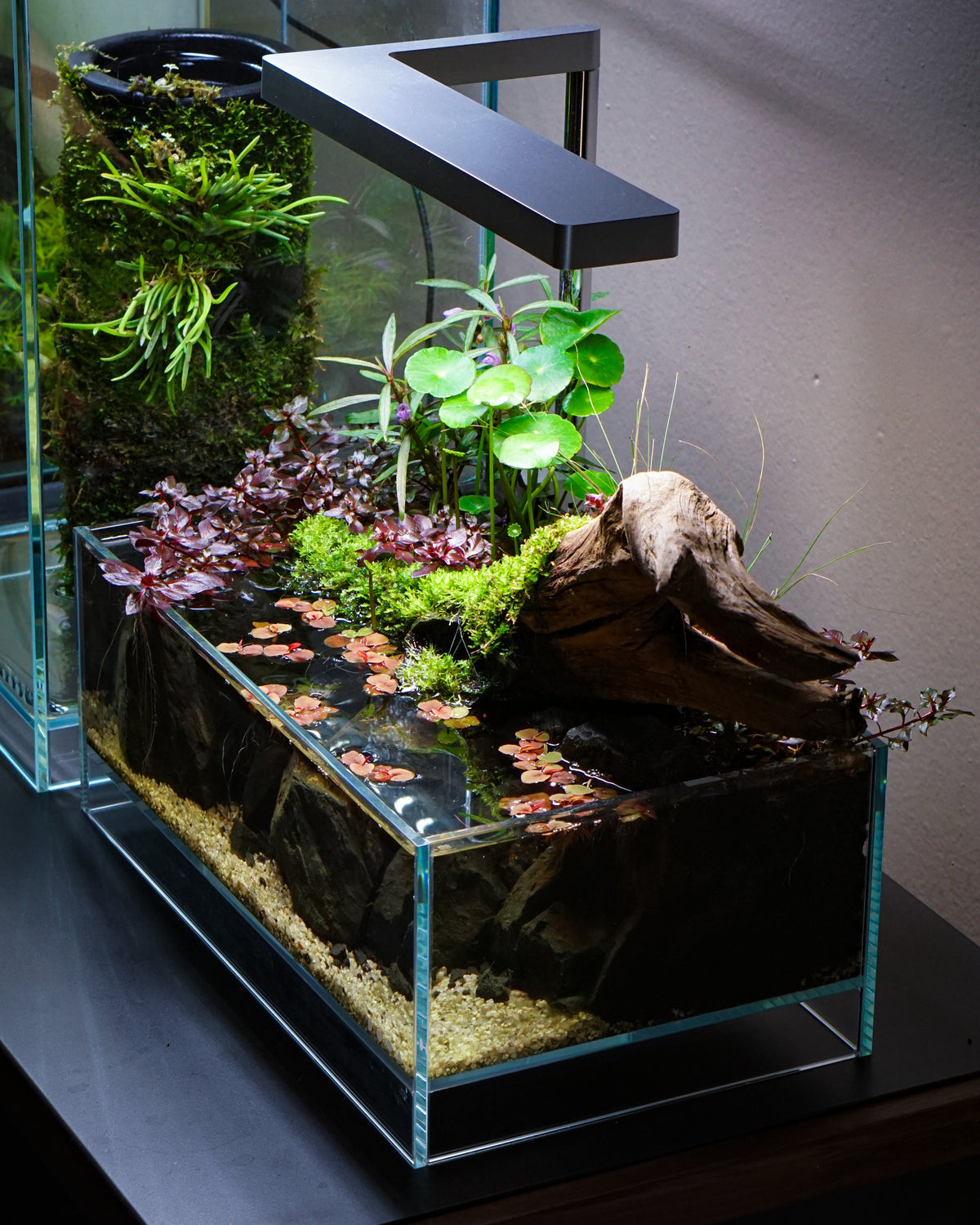
Emergent aquatic plants grow above the water surface with leaves in air, while submerged plants live fully underwater within the water column. Both can adapt to aquarium life: emergent-grown plants often shed their original air-formed leaves and regrow underwater leaves, a normal transition rather than a sign of plant failure.
Last updated: 14 October 2026
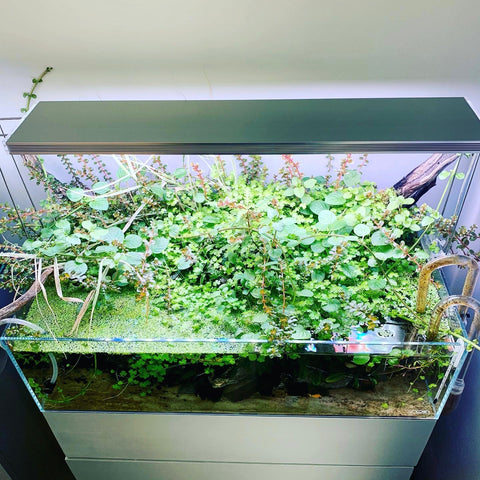
What are emergent and submerged aquarium plants?
Aquatic plants are widely available in aquarium stores and are generally divided into two main categories: emergent and submerged. These terms describe how plants grow in relation to the water’s surface and are important factors to consider when choosing suitable species for an aquarium.
In nature, most aquatic plants do not spend their entire lives completely underwater. Many grow along the shorelines of lakes, rivers, streams and ponds, where their roots remain submerged in water or moist substrate while their leaves grow above the surface. This allows them to absorb nutrients through their root systems and receive plenty of natural sunlight. However, seasonal flooding can temporarily cover these plants, forcing them to adapt to fully submerged conditions for several months.
Although growing underwater has its advantages, natural waterways can also expose plants to pollutants and changing environmental conditions. An aquarium is a much more controlled environment, where constantly adjusting the water level is impractical. Therefore, selecting plants that suit the aquarium’s layout, conditions and overall style is essential.
The difference between emergent and submerged plants is relatively simple. Emergent plants grow with their leaves and stems above the water’s surface, while their roots remain underwater or in the substrate. In contrast, submerged plants grow entirely or almost entirely beneath the water’s surface, with their leaves and stems developing within the water column.
There is often a difference in price, too. Growing plants in a fully submerged environment requires more time, equipment and resources, making them generally more expensive than plants grown emergent, which are often quicker and more cost-effective to produce.
The misconception about plants grown in air
"Plants grown above water do not adapt to the aquarium as good as plants that are grown underwater."
Usually, when an aquatic plant from an emergent cultivation is placed underwater. Unlike submerged vegetation, emergent aquatic plants original leaves (produced in terrestrial conditions) will melt. Without understanding this stage of the plant's adaptation to the new environment, many aquarists quickly assume the erosion of leaves indicates their new plants have failed.
However, it is worth waiting for this situation to play out. Patience is an aquascapers secret weapon.
This process takes time, and we should always expect some leaves to melt away. New leaves will appear as long as we provide food and the aquatic plants are well rooted in the soil. The newly released underwater leaves often contrast with the original leaves with slightly different shapes and colours. Strangely, when plants more used to growing on dry land above the water surface become submerged, form new leaves that are more rounded than before. The fresh leaves are entirely normal and all part of the process of adapting.
How aquatic plants adapt to life underwater
Stem Plants
Stem plants are among the quickest aquatic plants to adapt when transitioning from emergent to submerged growth. Genera such as Rotala, Ludwigia, Limnophila and Myriophyllum generally adjust well to underwater conditions, producing new leaves suited to their aquatic environment.
Other stem plants, including Hygrophila and Alternanthera, may take longer to adapt. They can lose leaves near the substrate, particularly when light penetration is limited. This is a normal response to changing conditions rather than an indication that the plant is failing. Providing adequate lighting, nutrients and CO2 will help encourage healthy new growth.
Cryptocoryne and Echinodorus
Cryptocoryne species are well known for melting after being introduced into a new aquarium, a process commonly called “Crypt melt.” Plants may lose all their leaves as they adjust to their new environment. Although this can look alarming, the rhizome often remains healthy, allowing fresh growth to emerge once the plant has adapted. Removing damaged leaves and allowing the plant time to recover is usually the best approach.
Echinodorus, commonly known as sword plants, can also experience leaf deterioration during adaptation. One characteristic sign is a mesh-like pattern developing across the leaf surface before the leaf blade eventually dies. New leaves will then emerge from the central rosette, gradually becoming better suited to submerged growth. Adaptation speed varies between species, with some colourful hybrid varieties proving more challenging.
Rhizome Plants from Riverbanks
Microsorum and Anubias are generally well suited to aquarium life because their natural habitats include riverbanks, streams and wetlands. These plants are accustomed to fluctuating water levels and can transition to submerged conditions without the extensive leaf loss seen in some other genera.
Their rhizomes support continued growth during adaptation, making them popular choices for aquascapers seeking durable, slow-growing plants. Rather than rushing the transition, provide stable conditions and allow the plants to settle naturally.
In the following plant profiles, we will explore these genera individually, moving from their general adaptation characteristics to practical examples and care advice drawn from our easy-plants guide.
Why aquarium plants from the shop are grown above water
Many aquarium plants available in local fish stores are grown above the water’s surface, a method known as emersed cultivation. Although these plants may lose some of their leaves when first submerged, this is a normal part of adapting to their new environment. In fact, emersed-grown plants offer several advantages that make them an excellent choice for aquarium beginners.
Stronger, more resilient growth: Plants grown above water receive natural light, supporting a fast metabolism and healthy development. Their stems also tend to be stronger, helping them withstand transport from the nursery to the shop and, finally, into your aquarium.
Stored nutrient reserves: Emersed-grown plants can build up considerable nutrient reserves during cultivation. These reserves provide valuable support while the plant adjusts to underwater conditions and develops new leaves adapted to its aquatic environment.
Fewer unwanted pests: Because these plants are not continuously exposed to aquarium water, they are less likely to carry waterborne diseases and parasites. This also reduces the risk of introducing unwanted hitchhikers, such as pest snails, into your aquarium.
Reduced algae risk: Emersed cultivation also helps avoid introducing unwanted algae spores and cyanobacteria commonly associated with submerged growing environments. While proper aquarium maintenance remains essential, starting with clean plant stock can help reduce potential problems.
Although some leaf loss is to be expected, patience and suitable lighting, nutrients and CO2 will encourage healthy new growth. Rather than worrying about melting leaves, allow your plants time to establish themselves.
Ultimately, emersed-grown plants from your local fish store are often the more forgiving choice for a newly established aquarium, offering durability, useful nutrient reserves and an easier starting point for beginners.
Easy Aquarium Plants That Settle Underwater
Choosing plants that adapt well to submerged conditions makes establishing a planted aquarium much easier. These beginner-friendly species generally tolerate moderate or low lighting and do not necessarily require CO2 injection, although additional CO2 and nutrients can encourage healthier, faster growth.
Rhizome Plants Tied to Wood or Rock
Anubias barteri 'Nana'
Anubias barteri 'Nana' is a popular low-tech aquarium plant thanks to its slow growth, low light requirements and minimal maintenance needs. Its compact appearance makes it ideal for decorating driftwood and rocks, particularly in the foreground or middle of the aquarium. It does not need to be planted in the substrate.
Important: Burying the rhizome of Anubias can cause it to rot. Attach the plant to wood or rock, keeping the rhizome exposed to the water.
Java Fern
Java Fern is another excellent choice for beginners, with several varieties offering different leaf shapes. Narrow Leaf, Windelov, Trident and Philippine Java Fern can all add texture to an aquascape. These plants tolerate low lighting and work particularly well in the middle ground, although attaching them higher on the hardscape can create background interest.
Like Anubias, Java Fern must have its rhizome exposed. Burying it in the substrate can cause rot, so secure it to driftwood or rocks instead.
Java Moss
Java Moss thrives in a range of conditions, including low-light aquariums and some medium-light setups. Attach it to wood or rocks to create a natural, established appearance. However, it grows vigorously and requires regular trimming to prevent it spreading into neighbouring plants, filters and small gaps in the hardscape. Without consistent maintenance, it can take over an aquarium.
Rosette and Carpeting Plants
Dwarf Sagittaria
Dwarf Sagittaria is a popular carpeting choice for low-tech aquariums. Under low lighting without CO2 supplementation, its grass-like leaves tend to remain short, helping it form a carpet across the substrate. Brighter lighting and additional CO2 encourage faster growth but can make the leaves grow taller, reducing the compact carpeting effect. It can grow in a variety of substrates and is particularly effective in larger aquariums.
Amazon Sword
Amazon Sword is a robust, leafy plant best suited to larger aquariums, where its size can become a feature. It can thrive under relatively low lighting and works well as a prominent middle-ground plant. Allow enough space for its broad leaves to develop without overwhelming smaller plants.
Pygmy Chain Sword
Pygmy Chain Sword is suitable for both low- and high-light aquariums. Plant it in small groups to create contrast with taller plants, or allow it to spread into a carpet in larger tanks. CO2 supplementation can help, but it is not essential.
Do not confuse Pygmy Chain Sword with Brazilian Microsword, which is considerably more demanding when it comes to lighting.
Cryptocoryne wendtii
Cryptocoryne wendtii forms attractive rosettes of elongated, often brown-toned leaves. It is best positioned in the middle ground, particularly in larger aquariums. When exposed to brighter lighting, its new leaves can develop a pinkish colour, adding variety to the aquascape.
Stem Plants for the Background
Ludwigia repens
Ludwigia repens is an adaptable stem plant valued for its changing leaf colours. Under low lighting, its foliage tends to remain dark green. As light intensity increases, the leaves can become light green or yellowish, while medium to high lighting encourages red coloration.
Planted towards the back of the aquarium, Ludwigia repens can create a multicoloured effect as its stems grow towards the light, with greener leaves lower down and redder growth near the surface.
Pearlweed is another versatile stem plant, but it needs frequent trimming to maintain its shape. If neglected, it can spread aggressively and take over available space.
With appropriate placement, suitable lighting and regular maintenance, these plants can create a beautiful, balanced aquarium without requiring a high-tech setup.
Do Aquarium Plants Need CO2 to Grow Underwater?
Aquarium plants need carbon dioxide (CO2) for photosynthesis, but this does not mean every planted tank requires a CO2 injection system. Many beginner-friendly plants can grow successfully without additional CO2, making them suitable for low-tech aquariums. However, supplying extra CO2 can encourage faster growth, healthier leaves and quicker adaptation when plants transition from emergent to submerged conditions.
How CO2 Changes Plant Growth
CO2 supplementation does more than increase growth speed. Combined with suitable lighting and nutrients, it can influence the shape and appearance of certain aquarium plants.
Dwarf Sagittaria, Pygmy Chain Sword and Pearlweed can respond differently when grown under brighter lighting with additional CO2. Rather than stretching upwards towards the light, they may develop more compact growth, spread horizontally and create a fuller carpeting effect. Without injected CO2, these plants can still thrive, but their growth may be taller or less dense, depending on the aquarium conditions.
Adding CO2 to Your Aquarium
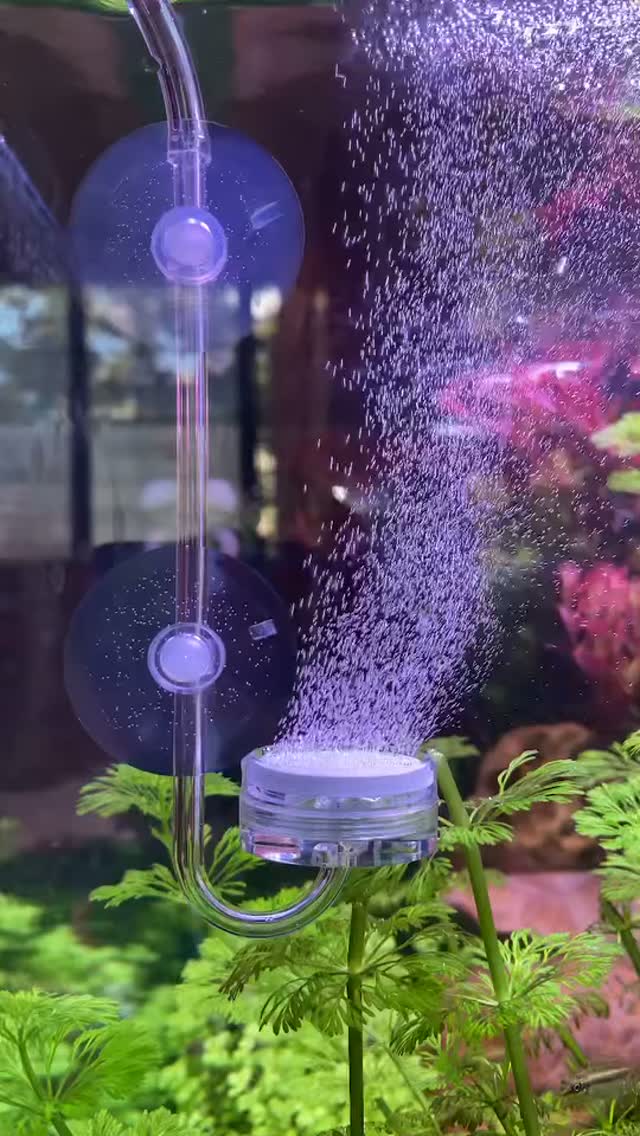
If you want to improve plant growth, an in-tank diffuser can help distribute injected CO2 throughout the aquarium. The Bazooka Flux in-tank CO2 diffuser is one option to consider when choosing equipment for your setup. Make sure your equipment suits your aquarium and adjust CO2 delivery carefully to maintain stable conditions for your plants and livestock.
To help monitor CO2 levels in your aquarium, use a CO2 drop checker kit to track changes in the indicator’s colour.
Ultimately, CO2 injection is not essential for every planted tank. Start with plants suited to your setup, maintain stable conditions and consider supplementation when you want faster growth, denser carpets or more demanding aquascaping results.
Why New Aquarium Plants Melt After Planting
One of the most common concerns for new aquarists is watching healthy-looking plants deteriorate shortly after being introduced into an aquarium. This process, often called plant melt, is particularly common with plants grown above water (emersed) that must adapt to life fully submerged.
When a plant transitions underwater, its existing leaves may struggle to function in the new environment. Some leaves turn yellow, become transparent or decay completely as the plant redirects its energy towards producing new, submerged growth. This is a natural adaptation process and does not necessarily mean the plant is dying. If the roots, rhizome or growing point remain healthy, recovery is often possible.
Common Mistakes That Prevent Plant Adaptation
Although some leaf loss is normal, unsuitable aquarium conditions can make the problem worse. Common mistakes include:
-
Removing plants too early: Pulling plants out while their air-grown leaves are melting can interrupt the adaptation process and damage developing roots.
-
Too few nutrients: Plants need an adequate supply of essential nutrients to produce healthy new growth.
-
Weak filtration: Insufficient filtration can compromise water quality and aquarium stability.
-
Too little light: Inadequate lighting limits photosynthesis and slows recovery.
-
No CO2: A lack of additional CO2 can restrict growth, particularly in aquariums with stronger lighting.
-
Irregular water changes: Neglecting maintenance allows waste and unwanted substances to accumulate.
-
Incorrect water parameters: Unsuitable water chemistry can prevent certain species from adapting successfully.
Maintaining Stable Aquarium Conditions
Regular weekly water changes of 30%–70% should be carried out to help maintain the best possible water quality. The appropriate percentage depends on stocking levels, plant growth, fertilisation and the aquarium's overall stability.
Temperature is another important but often overlooked aspect of maintaining a low-tech planted aquarium. Although lighting, nutrients and CO2 receive considerable attention, temperature also influences plant metabolism and growth. Aim to maintain a suitable, stable temperature for your chosen species.
Above all, patience is essential. Allow plants time to adjust, remove only severely decaying leaves when necessary and focus on providing consistent conditions that encourage healthy new growth.
Emergent Versus Submerged Growth in One Aquarium
Aquatic plants can grow either above or below the water’s surface, and understanding the differences helps you choose the right species and design a successful planted aquarium. Although both growth forms can thrive in an aquarium, they differ in appearance, adaptation and maintenance requirements.
| Growth type | Where it grows | Adaptation speed | CO2 needed |
|---|---|---|---|
| Emergent plants | Above the water surface | Faster, more durable stock | Yes, to speed recovery |
| Submerged plants | Below the water surface, within the water column | Slower, costlier to produce | Yes |
Summary
Maintaining an aquarium with both submerged and emergent growth is possible. The modern aquascaper can benefit from access to high-quality substrates, nutrients, lights, and CO2 injection. So, with a bit of forward-thinking, you can enjoy a beautiful display with all different types of plants.
If you are ready to introduce CO2 injection, the Pro-SE complete aquarium CO2 system brings the main components together in one package
Some species even produce flowers once established, which can be highly satisfying. Why not try creating a shallow pond-style aquascape that combines both submerged and emerged growth. This design pulls together both categories to create a very natural display.
Frequently asked questions
What does submerged plants meaning refer to in aquariums?
Submerged plants are species that grow completely underwater, taking in nutrients through both leaves and roots while living within the water column. In an aquarium they spend their whole life below the surface, and their leaves are shaped for water rather than air.
Do aquatic plants need to be fully submerged?
No. Many plants sold for aquariums grow along shorelines in the wild, under water for part of the year and in the air for the rest. In a tank they can be grown either way, as long as the roots stay wet.
What are emergent plants for an aquarium?
Emergent, or emersed, plants are grown above the waterline in nurseries, with their leaves and stems exposed to air and natural light. That is how most shop plants arrive, which is why they look different from the growth they put out once planted underwater.
Why do new aquarium plants lose their leaves after planting?
The leaves formed in air die back as the plant produces new ones suited to the water column. A Cryptocoryne can drop every leaf and still return from its rhizome. Leave the plant where it is, keep light and nutrients steady, and wait for the new growth.
Which aquarium plants are easiest to grow underwater?
Anubias barteri 'Nana', Java Fern and Java Moss tied to wood or rock, Dwarf Sag, Amazon Sword, Pygmy Chain Sword and Cryptocoryne wendtii in the substrate, and Ludwigia repens or Pearlweed as stem plants. All grow without CO2 injection and adapt faster with it.
Sources
- Glass Grown- Emergent vs. Submerged Aquatic Plants: Your Guide to Aquascaping
- Marine Plus Aquariums - Emersed vs Submersed Grown Aquarium Plants
Steady CO2 injection during the leaf-melt transition helps newly submerged plants rebuild their underwater leaf structure faster, since emergent-grown plants are used to unlimited atmospheric carbon dioxide and need a substitute source once submerged. A stable CO2 diffuser keeps dissolved CO2 even across the tank so both new and established plants get a consistent supply through the adaptation period. See the product.

Share:
Say hello to Lobelia Cardinalis “Mini”!
Combating Cyanobacteria in your aquarium